Velvet Ropes and Voter Envelopes: How Hollywood's Secret Screening Circuit Really Picks the Oscar Winners
Every February, the world tunes in to watch Hollywood's biggest night unfold like it's some kind of pure meritocracy — the best film wins, the most deserving performance takes home the gold, and art triumphs over politics. It's a beautiful story. It's also not entirely true.
The real Oscar race doesn't happen under studio lights. It happens weeks and months earlier, in candlelit screening rooms, catered dinner parties, and invitation-only Q&A sessions where Academy members are quietly, strategically, and very expensively courted. Welcome to the Oscar campaign circuit — the side of awards season nobody really wants to talk about out loud.
What Even Is an 'Oscar Campaign Screening'?
Here's the setup: the Academy of Motion Picture Arts and Sciences has roughly 10,000 voting members spread across different branches — actors, directors, cinematographers, editors, composers, and so on. Studios need those people to not only watch their films but to feel something about them before voting opens.
So they throw parties. Very fancy, very strategic parties.
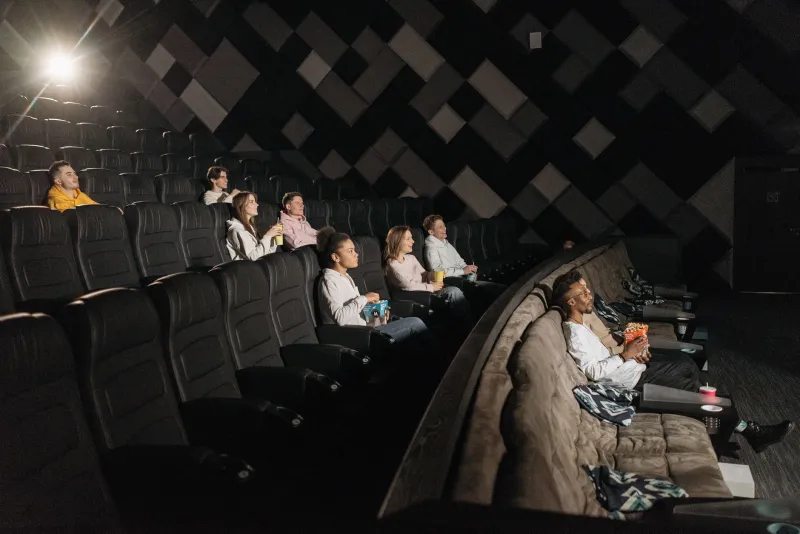
Private screenings are the backbone of the whole operation. Studios rent out intimate venues — think boutique theaters in West Hollywood, private rooms at the Soho House, or even the living rooms of well-connected producers — and invite specific slices of the voting membership. The goal isn't just exposure. It's connection. It's making a voter feel like they were chosen, like they're part of an inner circle that recognized a film's greatness before everyone else did.
After the film rolls, there's usually a Q&A or a dinner. Sometimes both. And that's where the real magic — or depending on how cynical you are, the real manipulation — happens.
The Art of the Post-Screening Room
Picture this: you've just watched a deeply emotional prestige drama. The lights come up. And standing twenty feet away from you is the lead actor, visibly moved, ready to talk about the personal journey the role took them on. Maybe the director is there too, explaining the three-year struggle to get the film made. A publicist is hovering nearby, making sure key voters get a moment with the talent.
This is not an accident. Every element of a post-screening experience is choreographed with surgical precision by awards campaign consultants — a very real, very lucrative Hollywood subspecialty. These are the people who know which branch members are undecided, which ones respond to emotional storytelling versus technical craft arguments, and how to position a film's narrative so it feels inevitable.
The catering isn't random. The venue isn't random. The guest list absolutely isn't random.
Who Gets Invited — and Who Does the Inviting
This is where it gets genuinely fascinating. Studios don't just blast invites to the full Academy membership and hope for the best. Campaign teams segment their outreach. If you're pushing a film with a technically groundbreaking visual effects package, you're throwing a separate event specifically for the cinematography and visual effects branches. If your movie is a big ensemble piece, you're targeting the actors' branch — the single largest voting bloc in the Academy — with something a little more glamorous.
A-list celebrities who are also Academy members carry enormous informal weight in this process. When a major star shows up to a private screening and spends the cocktail hour raving about a performance to fellow voters, that word-of-mouth carries a different kind of credibility than any billboard on Sunset Boulevard. Studios know this. They cultivate those relationships deliberately.
Some campaigns go even further, organizing what insiders call "ambassador screenings" — where a beloved, respected industry figure essentially hosts the event and lends their personal credibility to the film being screened. It's an endorsement dressed up as a dinner party.
The Films That Played the Game Best
Look back at recent Oscar history and you can almost trace the fingerprints of an aggressive screening campaign on certain wins. Films that arrived at the Academy Awards with overwhelming momentum didn't always start there — they built it, event by event, conversation by conversation.
The King's Speech is a textbook case that industry veterans still reference. The campaign team behind that film ran one of the most methodical private screening operations in modern Oscar history, targeting branch after branch with tailored events and making sure voters felt personally connected to the material. It walked away with Best Picture.
More recently, the campaigns behind films like CODA and Everything Everywhere All at Once were praised for finding creative ways to reach voters outside the traditional Beverly Hills circuit — recognizing that the Academy's membership had diversified and that the old playbook needed updating.
The films that tend to lose despite critical darling status? Often, it's because their campaigns underestimated the screening circuit or came in too late.
The Unwritten Rules Nobody Writes Down
There's an etiquette to all of this that nobody publishes anywhere but everyone understands. You don't openly lobby a voter — that's considered gauche and can actually backfire. You don't show up to a competitor's screening event and talk up your own film. You don't bad-mouth other campaigns publicly, even if you're absolutely doing it privately.
And there's a particular kind of performance expected from the talent at these events. Authentic vulnerability is currency. A star who shows up polished and guarded reads as inauthentic. The ones who sit in that Q&A chair and genuinely seem to need the audience to understand what making this film meant to them? Those are the ones voters remember when they log into their voting portal.
It's a delicate line between genuine passion and calculated presentation, and the best campaigns find talent who can walk it naturally.
Does Any of This Actually Work?
The honest answer is: yes, but it's complicated. A truly terrible film cannot be campaigned into an Oscar win — the Academy has enough members with enough genuine taste that pure manipulation has its limits. But in a competitive year where several films are legitimately excellent? The campaign circuit absolutely moves the needle.
Academy voters are human. They respond to feeling seen and included. They respond to personal connections with filmmakers and performers. And they respond to the narrative momentum that a well-run screening campaign builds — that sense that this is the film the industry has decided matters this year.
The envelope gets opened in front of millions. But in a lot of ways, it was already decided in a room most of us will never get into.
And honestly? That's very Hollywood.